The Claw Putting Grip Is Growing — And There’s a Reason
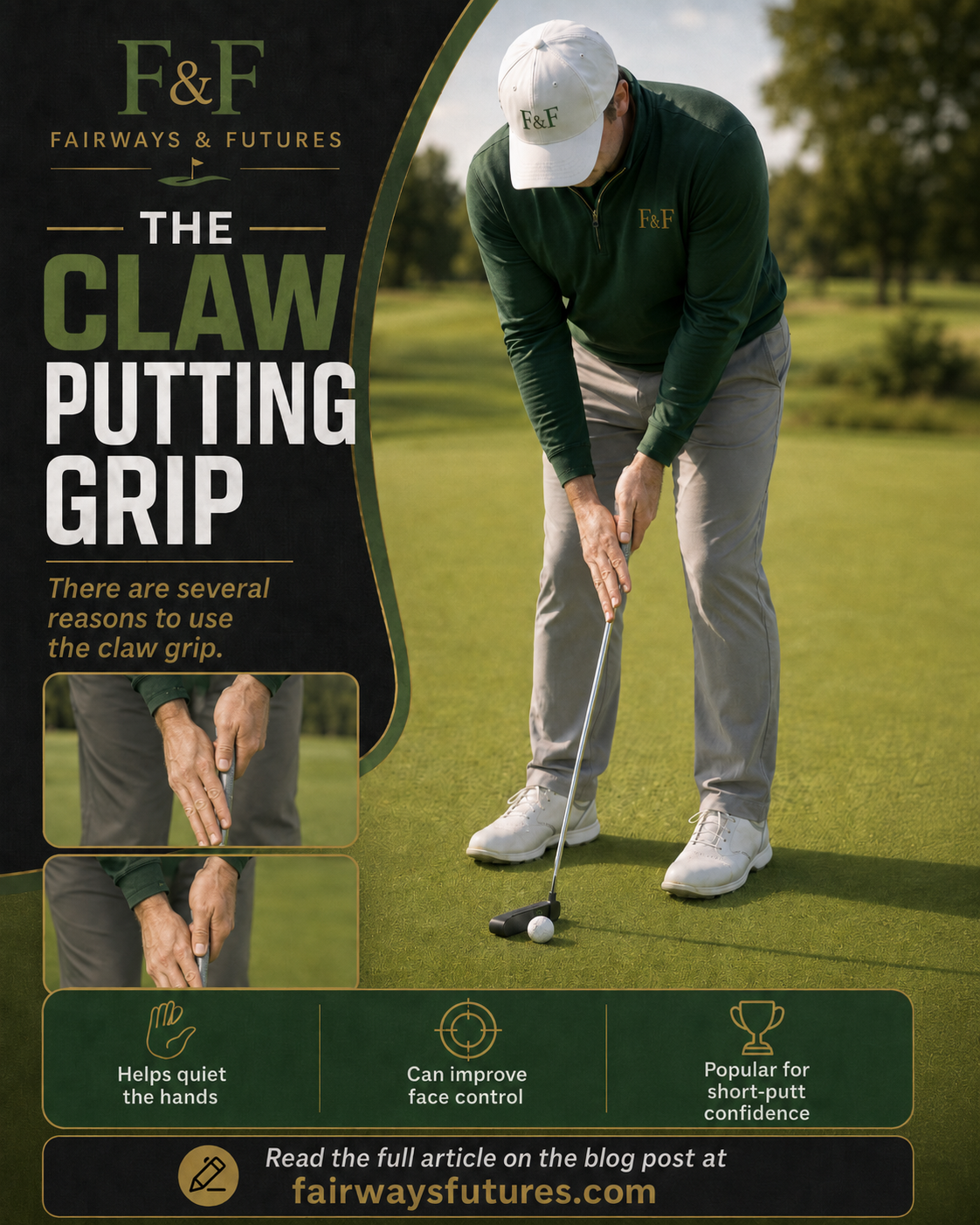
Image created with AI
The claw putting grip is becoming more common in golf, especially among players who want more confidence on short putts.
A lot of golfers still use a traditional putting grip, and there is nothing wrong with that. But when the hands get too active, especially from six feet and in, putting can get shaky fast. The trail hand can push, flip, twist, or jab at the ball. That small hand movement can send the putter face offline and cause missed short putts.
That is where the claw can help.
The claw grip puts the trail hand in a more passive position. Instead of wrapping fully around the grip and controlling the stroke, the trail hand sits more on the side of the putter. This can help quiet the hands and let the shoulders, arms, and lead hand control the stroke more naturally.
For golfers who struggle with short-putt nerves or the yips, that can be a big deal.
One major benefit of the claw is that it can help you make a longer, smoother stroke on short putts. Many golfers get too tense inside six feet. They make the stroke short, quick, and jabby. The claw can reduce that hit impulse and help the putter move back and through with better rhythm.
A smoother stroke usually means better face control.
Putting is all about starting the ball on line. Even a small twist of the face can cause a miss. By reducing the trail hand’s influence, the claw can make it easier to keep the putter face stable through impact.
The claw is not magic, and it is not for everyone. Some players will prefer a traditional grip. But if you struggle with overactive hands, short-putt anxiety, face control, or the yips, it is worth testing.
The grip may look different, but the scorecard does not care how your hands look. It only cares whether the ball goes in.
The claw grip is growing because it gives many golfers a simple way to quiet the hands, smooth out the stroke, and build more confidence on the greens.
If short putts have been costing you strokes, the claw might be worth a serious look.
